

Sale!
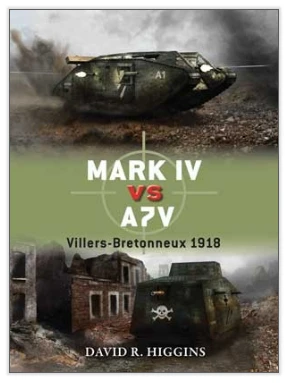
Osprey Publishing DUE49 Mark IV Vs A7V
Original price was: $16.11.$11.28Current price is: $11.28.
- Buy with confidence, backed by quality.
- Top Quality Products
- SSL encryption, absolutely safe shopping
- Enjoy top quality items for less

ABOUT THIS PRODUCT
The German A7V and the British Mark IV were similar in weight, size, and
speed, but differed significantly in armour, armament and maneuverability.
The A7V had thicker armour, and had nearly double the horsepower per ton.
The Mark IV’s pair of side-mounted 6pdr cannons forced the vehicle to
present its side arc to an enemy in order to fire one of its main guns.
Possessing twice as many machine guns as the Mark IV, the A7V had a
frontally mounted 57mm gun that proved capable of defeating the Mark IV’s
armour. The Mark IV’s rhomboid design proved superior in crossing trenches,
climbing obstacles and moving over rough terrain. As the first
tank-versus-tank engagement in history, the fighting around
Villers-Bretonneux showcased the British Mark IV and German A7V designs.
Although not purpose-built to combat enemy armour, both vehicles proved the
viability of such operations, which during the postwar period led to key
advances in suspension, armour, gunsights, ammunition, and command and
control. While the British continued to develop their armoured forces,
German armour development never materialized, and only in the postwar period
did they address the issue.
BIOGRAPHICAL NOTE
David R. Higgins attended the Columbus College of Art & Design, and received
a BFA from Ohio State University and an MISM from Keller. In addition to The
Roer River Battles and King Tiger vs IS-2: Operation Solstice 1945 he has
written over 40 articles for magazines such as Strategy and Tactics,
Armchair General, Modern War and World at War, as well as MCS Group’s States
of Conflict. He lives in Columbus, Ohio.
CONTENTS
Introduction
Chronology
Design and Development
Technical Specifications
The Combatants
The Strategic Situation
Combat
Statistics and Analysis
Further Reading
Index
Be the first to review “Osprey Publishing DUE49 Mark IV Vs A7V”
Related products
Sale!

Original price was: $89.99.$62.99Current price is: $62.99.
Sale!

Original price was: $29.70.$20.79Current price is: $20.79.
Sale!
Original price was: $5.95.$4.17Current price is: $4.17.
Sale!

Original price was: $59.99.$41.99Current price is: $41.99.
Sale!

Original price was: $7.65.$5.36Current price is: $5.36.
Sale!

Original price was: $31.41.$21.99Current price is: $21.99.
Sale!
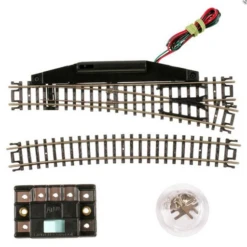
Track & Layout
Original price was: $26.99.$18.89Current price is: $18.89.
Sale!

Original price was: $37.99.$26.59Current price is: $26.59.
Reviews
There are no reviews yet.